Face redness treatment in Busan, Seomyeon
Target visible redness and vessels,
with a physician-led plan.
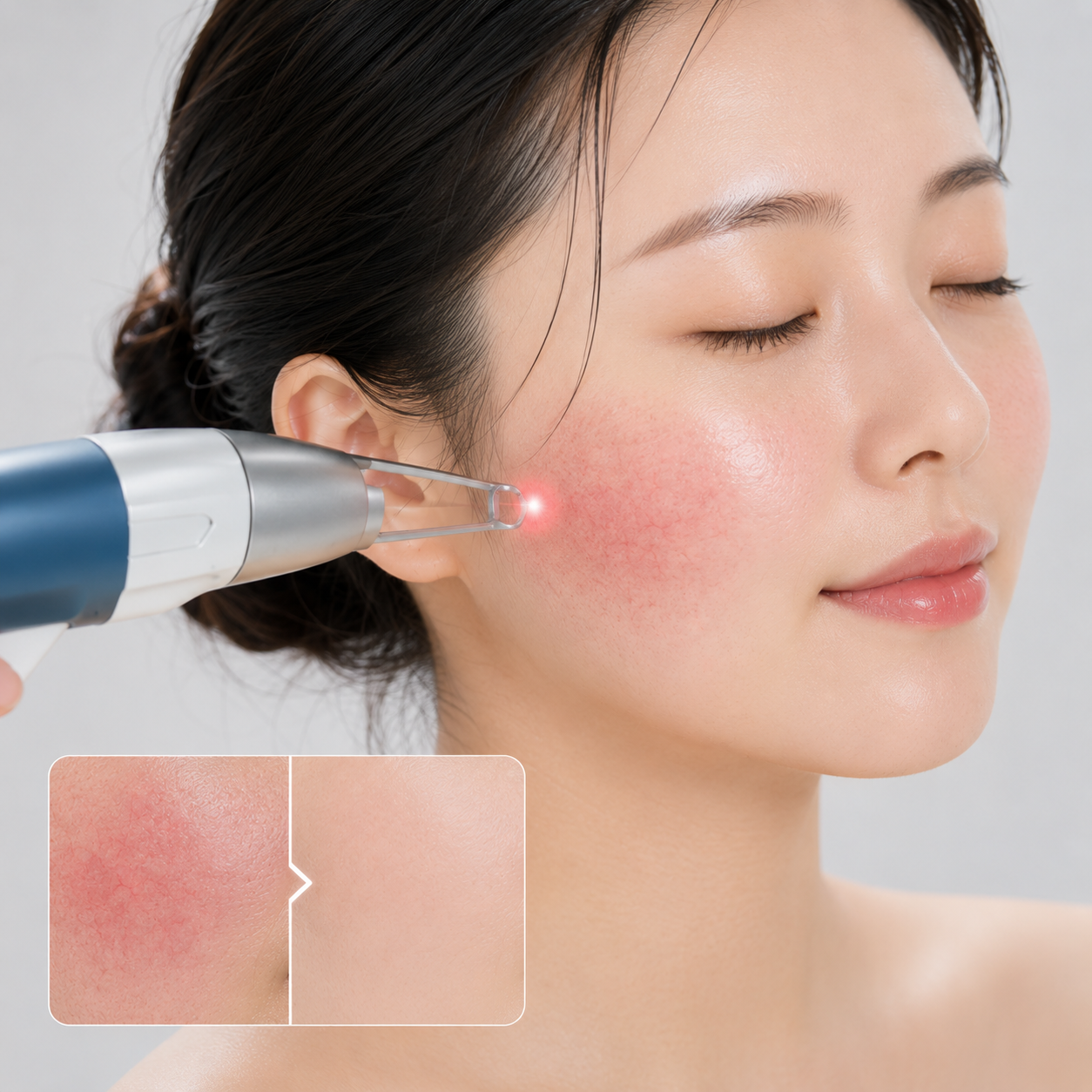
Persistent facial redness, rosacea-related flushing, and visible capillaries can be evaluated for vascular-laser treatment. Different vascular wavelengths target hemoglobin at different vessel depths, so the treating physician first assesses the pattern of redness, skin type, and treatment goals before selecting settings or a device. Newline Clinic confirms specific vascular-laser device availability and final treatment planning at consultation.
At a glance.
- Treatment time
- Often 15–30 minutes
- Visible change
- Gradual over weeks
- Sessions
- Individualized
- Downtime
- Varies by settings
- Maintenance
- May be needed
- Newline price
- Confirm at consultation
Before & after.

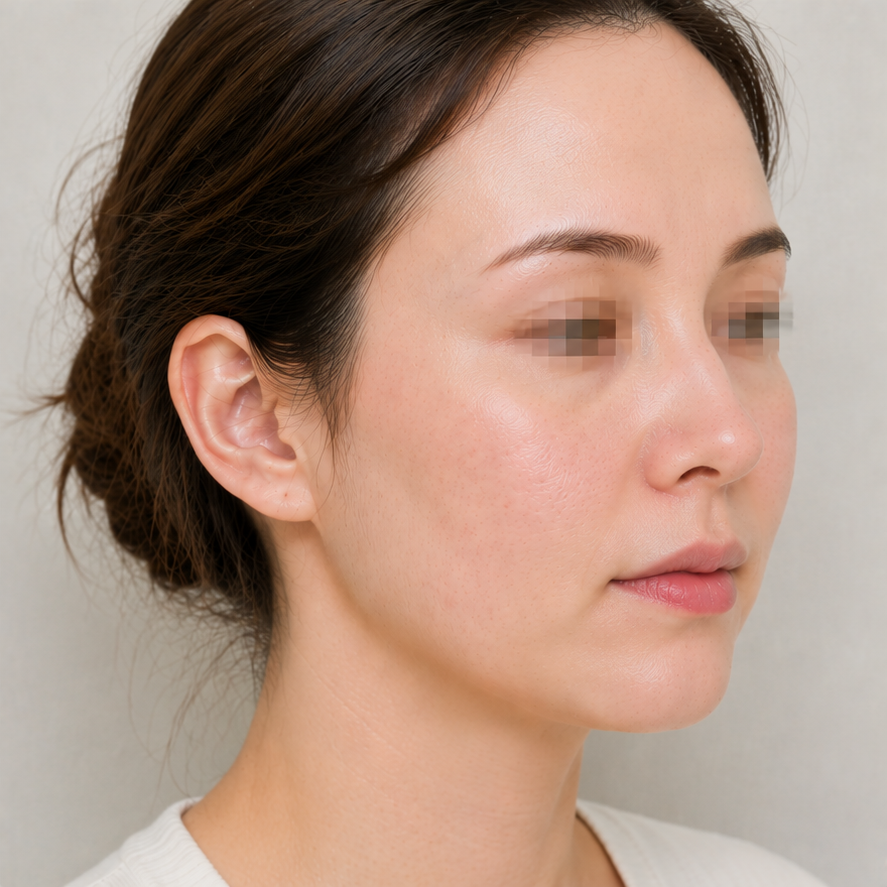
What is Vascular Laser?
Selective light for visible vessels.
Vascular laser treatment uses wavelengths that are preferentially absorbed by hemoglobin in visible blood vessels. Controlled energy heats selected vessels while aiming to limit injury to surrounding tissue. Over time, treated vessels may become less visible as the body clears them. Different wavelength families are used for superficial redness and deeper vessels. Exact device availability, wavelength, cooling method, and settings at Newline Clinic are confirmed by the treating physician after assessment.
The science
,
simplified.
The diagnosis and vessel depth matter as much as the laser itself. Treatment settings are individualized rather than selected from a fixed package.
Vascular assessment
The treating physician evaluates persistent redness, visible capillaries, flushing pattern, post-acne redness, or other vascular concerns and confirms whether laser treatment is appropriate.
Comfort preparation
Cooling and, when appropriate, topical numbing may be used depending on the device, treatment area, and planned intensity.
Targeted laser pulses
Vascular-specific wavelengths deliver controlled pulses that are absorbed by hemoglobin. Device type, fluence, pulse duration, spot size, and cooling are adjusted for the vessel and skin response.
Gradual vessel clearance
Temporary redness, warmth, swelling, or purpura can occur. Improvement is generally assessed over the following weeks, and additional sessions are considered based on response.
What vascular lasers may target.
The examples below describe common vascular-laser indications. Diagnosis, device availability, session count, and expected response are confirmed individually.
| Concern | Typical target | Session planning | Newline approach |
|---|---|---|---|
| Persistent facial redness | Superficial vascular redness | Often a series | Physician-selected device/settings |
| Rosacea-related flushing | Diffuse visible redness | May need maintenance | Diagnosis and trigger history first |
| Broken capillaries | Visible telangiectasia | Depends on vessel size/depth | Individualized wavelength/settings |
| Cherry angiomas | Small vascular lesions | Case dependent | Physician evaluation required |
| Post-acne redness | Residual erythema | Varies with skin response | Combined skin plan if needed |
| Other vascular lesions | Varies by diagnosis | Often multiple | Treat or refer after assessment |
Choose by vessel type
,
not by brand alone.
The source page named specific devices and prices, but those device-specific claims are not confirmed in the Newline Clinic materials supplied for this site. They are therefore not presented as Newline offerings.
| Laser category | Newline price | Common use | Availability |
|---|---|---|---|
| Pulsed-dye vascular laser | Confirm at consultation | Superficial redness and visible vessels | Device confirmed at consultation |
| 532 nm vascular laser | Confirm at consultation | Superficial capillaries and redness | Device confirmed at consultation |
| 1064 nm vascular laser | Confirm at consultation | Selected deeper vessels | Device confirmed at consultation |
| Combined vascular protocol | Confirm at consultation | Mixed vessel depth or diffuse redness | Physician determines plan |
Good candidates & when to wait.
A physician should confirm the cause of redness before treatment. Some conditions that look vascular may need a different approach.
May be suitable for
- Persistent facial redness or flushing
- Visible capillaries on the cheeks or nose
- Post-acne redness after active acne is controlled
- Selected small vascular lesions after assessment
- Patients who understand that a series or maintenance may be needed
Discuss or postpone when
- The diagnosis is uncertain or a lesion is changing
- There is active infection, open skin, or significant irritation
- You recently had intense sun exposure or tanning
- You take photosensitizing or bleeding-risk medication
- You are pregnant, breastfeeding, or have a condition that may affect healing
What happens after.
Aftercare depends on the device and intensity. Follow the instructions given after your own treatment rather than a fixed online protocol.
After your treatment
- Use gentle cooling if recommended for warmth or swelling
- Avoid excessive heat, vigorous exercise, and known flushing triggers for the period advised by your physician
- Use gentle cleanser and moisturizer while the skin is sensitive
- Use broad-spectrum sunscreen and minimize direct sun exposure
- Avoid picking, scrubbing, or aggressive exfoliating products until the skin has settled
- Contact the clinic if you develop blistering, severe pain, spreading redness, or other unexpected symptoms
Possible side effects
- Temporary redness, warmth, or mild swelling
- Temporary purpura or bruising with some vascular-laser settings
- Temporary darkening of treated vessels or spots before fading
- Mild sensitivity or dryness during early recovery
- Blistering, crusting, or prolonged redness
- Post-inflammatory hyperpigmentation or hypopigmentation
- Scarring or infection
- Incomplete response, recurrence, or need for additional treatment
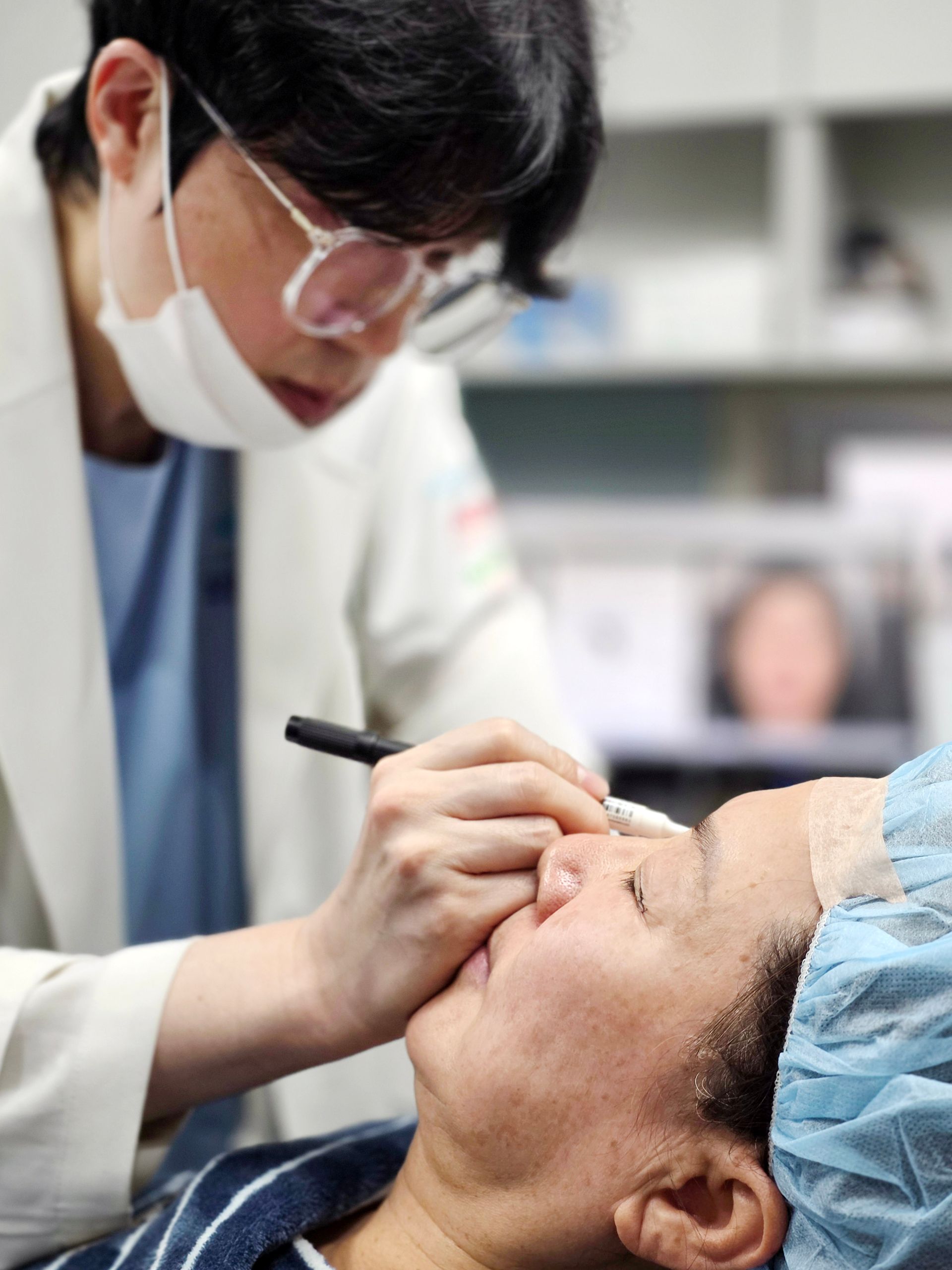 Doctor Portrait
Son Hee-dong, MD, PhD,
board-certified
plastic surgeon.
Chief Director of Newline Clinic in Seomyeon, Busan, with a doctorate in medicine and long-standing clinical and academic work in plastic surgery.
- Board-certified plastic surgeon
- Doctorate in Medicine (MD, PhD), Dong-A University Graduate School
- Clinical Professor, Department of Plastic Surgery, Dong-A University Hospital
- Full member, Korean Society of Plastic and Reconstructive Surgeons
- Full member, Korean Society for Aesthetic Plastic Surgery
- Chief Director, Newline Clinic · established in Seomyeon in 2005